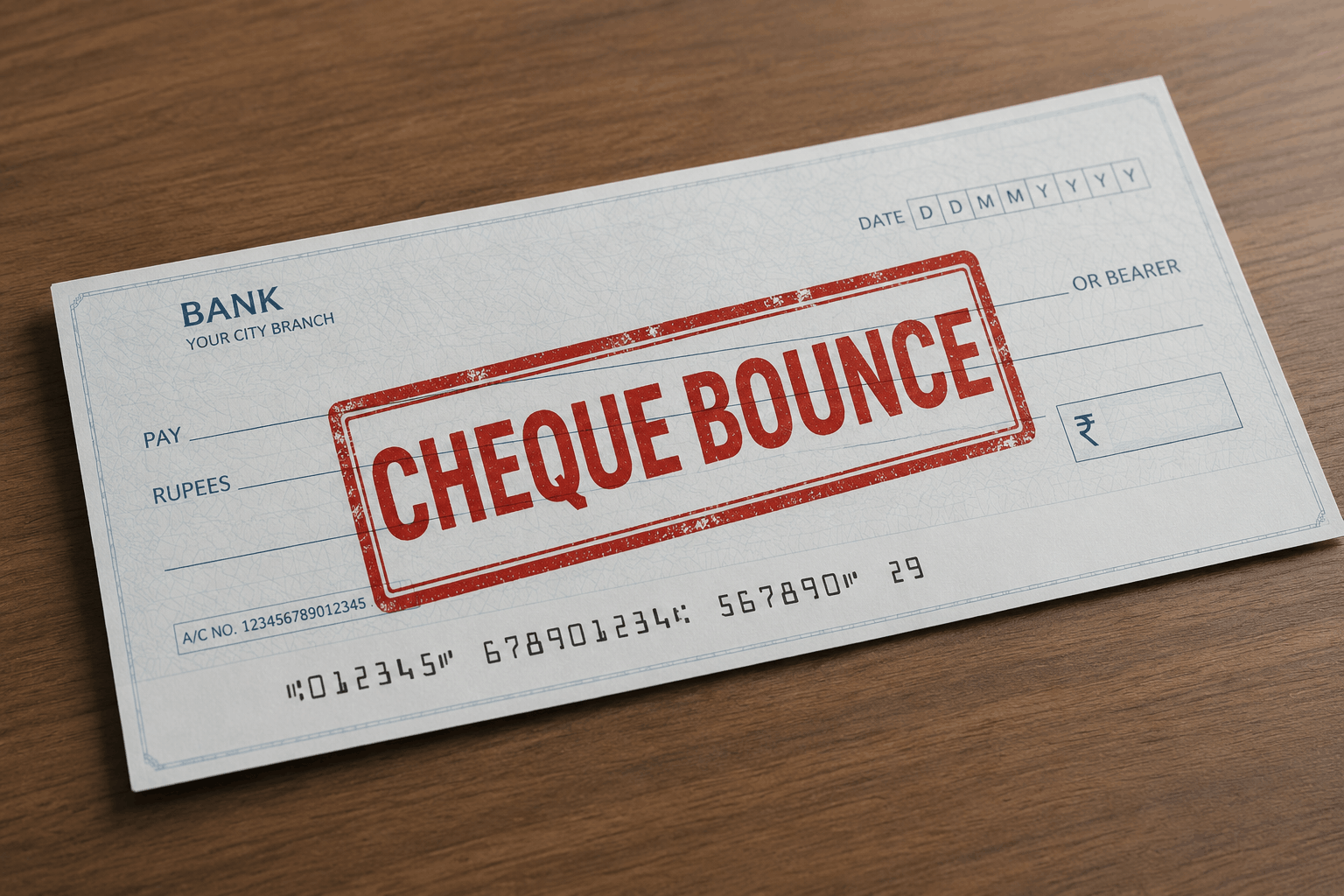
Cheque bounce cases are among the most common financial and legal disputes in India. Whether it is a business transaction, personal loan repayment, partnership dealing, or payment for services, a dishonoured cheque can create serious financial complications for both parties. To protect the credibility of cheque transactions and maintain trust in the banking system, the Indian legal system provides strict remedies under Section 138 of the Negotiable Instruments Act, 1881.
Understanding cheque bounce laws is important for business owners, salaried individuals, companies, traders, startups, and professionals who regularly deal with cheque payments. A cheque dishonour not only affects financial stability but can also lead to criminal proceedings if legal obligations are ignored.
What is a Cheque Bounce?
A cheque bounce occurs when a bank refuses to process a cheque presented for payment. This usually happens due to insufficient funds in the issuer’s bank account, signature mismatch, account closure, overwriting, payment stop instructions, or other banking issues.
When the cheque is dishonoured, the bank issues a “Cheque Return Memo” specifying the reason for non-payment. If the dishonour is due to insufficient funds or similar financial reasons, the payee can initiate legal action under Section 138 of the Negotiable Instruments Act.
Understanding Section 138 of the Negotiable Instruments Act
Section 138 of the Negotiable Instruments Act, 1881, makes cheque bounce a criminal offence in India under specific circumstances. The law was introduced to ensure financial discipline and strengthen trust in cheque-based transactions.
Under this provision, the drawer of the cheque can face legal consequences if the cheque is dishonoured due to insufficient balance or if it exceeds the amount arranged with the bank.
The law aims to protect the rights of the payee and provide an effective legal remedy for recovering legitimate dues.
Essential Conditions for Filing a Case Under Section 138
For a cheque bounce case to be legally valid under Section 138 NI Act, certain conditions must be fulfilled:
1. Legally Enforceable Debt or Liability
The cheque must have been issued towards repayment of an existing debt or legal liability. Cheques issued as gifts or donations generally do not qualify.
2. Presentation Within Validity Period
The cheque must be presented to the bank within its validity period, which is usually three months from the date mentioned on the cheque.
3. Dishonour by the Bank
The cheque must be returned unpaid by the bank due to insufficient funds, account closure, payment stopped, or similar reasons.
4. Legal Demand Notice
The payee must send a written legal notice to the drawer within 30 days from receiving the cheque return memo from the bank.
5. Failure to Make Payment
The drawer gets 15 days from the receipt of the legal notice to make the payment. If the payment is not made within this period, the complainant can file a cheque bounce complaint before the appropriate court.
Common Reasons for Cheque Bounce
Cheque dishonour may occur for several reasons, including:
- Insufficient bank balance
- Signature mismatch
- Overwriting on cheque
- Account closed
- Incorrect cheque details
- Post-dated cheque issues
- Payment stopped by drawer
- Damaged or torn cheque
- Exceeding arrangement with bank
Among these, insufficient funds remain the most common reason for legal proceedings under Section 138 NI Act.
Legal Procedure in a Cheque Bounce Case
The cheque bounce legal process involves multiple stages and must be handled carefully to avoid procedural errors.
Step 1: Receiving Cheque Return Memo
After dishonour, the bank issues a return memo specifying the reason for cheque bounce.
Step 2: Sending Legal Notice
The payee sends a legal notice demanding payment within the statutory time limit.
Step 3: Waiting Period of 15 Days
The drawer is provided an opportunity to clear the dues within 15 days from receiving the notice.
Step 4: Filing Complaint Before Magistrate Court
If payment is not received, the complainant can file a criminal complaint under Section 138 before the jurisdictional magistrate court.
Step 5: Court Proceedings
The court examines documents, hears both parties, records evidence, and passes appropriate orders.
Punishment for Cheque Bounce Under Section 138
If found guilty, the accused may face:
- Imprisonment up to two years
- Monetary fine up to twice the cheque amount
- Both imprisonment and fine
Courts may also encourage settlement or compensation between parties to resolve disputes efficiently.
Documents Required for Cheque Bounce Case
The following documents are generally required while filing a complaint:
- Original cheque
- Bank return memo
- Copy of legal notice
- Postal receipt or courier proof
- Delivery acknowledgment
- Identity proof of complainant
- Supporting transaction documents
Proper documentation strengthens the complainant’s case and improves legal credibility.
Can a Cheque Bounce Case Be Settled?
Yes, cheque bounce matters are compoundable offences, which means parties can settle the dispute mutually even during court proceedings. Many cases are resolved through negotiation, mediation, or payment settlement before final judgment.
Settlement helps save time, litigation costs, and business relationships while ensuring financial recovery.
Importance of Hiring a Cheque Bounce Lawyer
Cheque bounce litigation involves strict legal timelines and procedural requirements. Even a small delay in sending the notice or filing the complaint may affect the case.
Experienced cheque bounce lawyers assist clients in:
- Drafting legal notices
- Filing complaints properly
- Preparing legal documentation
- Representing clients before court
- Negotiating settlements
- Recovering outstanding dues
Professional legal assistance ensures proper compliance with the Negotiable Instruments Act and improves the chances of successful recovery.
How Businesses Can Prevent Cheque Bounce Issues
Businesses and individuals can reduce cheque bounce risks by following preventive measures:
- Verify payer credibility before accepting cheques
- Maintain proper transaction records
- Avoid accepting incomplete cheques
- Use written agreements for financial dealings
- Confirm account details before transactions
- Prefer digital payments for large transactions
Preventive legal awareness can help avoid unnecessary litigation and financial losses.
Recent Importance of Section 138 Cases in India
Cheque bounce disputes continue to rise due to increasing commercial transactions and delayed payments. Courts across India treat cheque dishonour cases seriously because they directly impact financial discipline and commercial confidence.
The law acts as a strong deterrent against intentional non-payment and supports transparent business practices.
Conclusion
Cheque bounce cases under Section 138 of the Negotiable Instruments Act play a vital role in protecting financial transactions in India. Whether you are an individual lender, business owner, company, or service provider, understanding your legal rights after cheque dishonour is extremely important.
Timely legal action, proper documentation, and professional legal guidance can help recover dues effectively while protecting your financial interests. If you are facing a cheque bounce dispute, consulting an experienced legal professional can make the process smoother, faster, and legally secure.